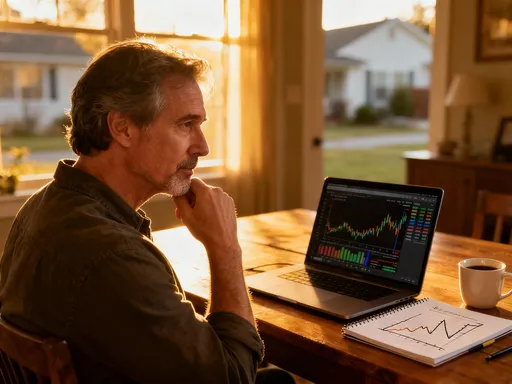
How I Ride the Investment Cycle Without Losing Sleep — A Real Talk on Diversifying Smarter
Ever feel like your money’s either stuck in low-growth accounts or swinging wildly in risky bets? I’ve been there—nervous every time the market sneezed. Over years of trial, error, and a few costly lessons, I learned that timing the investment cycle isn’t about predicting crashes or chasing hot trends. It’s about balancing your assets so no single shock wipes you out. This is how I built a diversified strategy that works with the cycle, not against it—and how you can too, without losing peace of mind.
The Hidden Rhythm of Markets: What the Investment Cycle Really Is
The investment cycle is not a mysterious force reserved for Wall Street insiders. It is the natural pattern of economic movement—growth, overheating, slowdown, and recovery—that repeats over time. Like the changing of seasons, each phase brings different conditions that affect how investments perform. During expansion, consumer spending rises, businesses grow, and corporate earnings improve. This is typically when stocks deliver strong returns. As the economy reaches its peak, inflation may climb, interest rates rise, and optimism becomes overconfidence. Markets start to price in perfection, setting the stage for a correction. When contraction follows, job losses increase, spending slows, and investor sentiment turns cautious. Finally, in the recovery phase, stimulus measures take effect, confidence returns, and asset prices begin to climb again from depressed levels.
Understanding this rhythm transforms the way you approach investing. Instead of reacting emotionally to daily headlines or quarterly results, you begin to see market movements as part of a broader, predictable pattern. For instance, when stock prices fall sharply, many investors panic and sell. But if you recognize that the economy may be entering a contraction phase—where such declines are normal—you can resist the urge to act impulsively. Similarly, when markets surge year after year, it’s easy to assume they will keep going forever. Yet historically, prolonged booms often precede downturns. By aligning your portfolio with the current phase, you position yourself to benefit from what typically comes next rather than chasing what has already happened.
One of the most powerful insights I’ve gained is that no single asset class wins in every phase. Stocks tend to outperform during expansion and recovery, but they often struggle when inflation spikes or recession hits. Bonds, on the other hand, may lag during strong growth periods but provide stability and income when equities decline. Cash becomes valuable during uncertainty, offering flexibility to buy assets at lower prices later. Real estate and commodities like gold also play unique roles—real estate can generate rental income and appreciate over time, while gold often holds value when confidence in paper money wanes. Recognizing these dynamics allows you to shift emphasis across asset classes based on the economic environment, rather than staying rigidly fixed in one place.
This doesn’t mean you need to make constant changes or time the market perfectly. In fact, trying to pinpoint exact turning points can lead to costly mistakes. The goal is not precision but preparedness. By understanding the investment cycle, you develop a framework for making more informed decisions. You stop seeing volatility as a threat and start viewing it as an opportunity to rebalance and realign. Over time, this mindset reduces stress and improves outcomes. The market will always move up and down, but with awareness of the cycle, you’re no longer at its mercy—you’re working alongside it.
Why Putting All Eggs in One Basket Feels Safe—Until It’s Not
There’s a certain comfort in focusing your investments on one area—especially when it’s performing well. I once poured most of my savings into technology stocks because they were delivering double-digit returns year after year. Everyone was talking about innovation, disruption, and the future of digital life. It felt smart, even forward-thinking. But when interest rates rose and valuations corrected, that same sector dropped by nearly 40% in a single year. Overnight, my confidence—and a big chunk of my portfolio—vanished. That experience taught me a hard lesson: concentration feels safe only as long as everything goes right. The moment conditions change, the lack of diversification exposes you to outsized risk.
Diversification is often described as the only free lunch in investing, and for good reason. When you spread your money across different asset classes—such as stocks, bonds, real estate, and commodities—you reduce the impact of any single underperforming investment. This doesn’t guarantee profits or eliminate losses, but it does smooth out the ride. For example, when stock markets fall during a recession, high-quality bonds often rise in value or hold steady, helping offset equity losses. Real estate may decline in some downturns, but rental income can continue providing cash flow. Even commodities like gold, which don’t produce income, can act as a hedge during times of inflation or financial stress.
The danger of being undiversified isn’t just financial—it’s psychological. When your wealth is tied to one investment, every news headline feels personal. A company’s earnings report, a regulatory change, or a shift in consumer behavior can send your emotions into turmoil. This makes it harder to think clearly and increases the likelihood of making impulsive decisions, like selling low out of fear. Diversification acts as a buffer, both financially and emotionally. It creates space between you and the noise, allowing you to stay focused on long-term goals rather than short-term swings.
True diversification goes beyond owning multiple stocks. It means considering factors like geography, industry sector, company size, and investment style. Owning ten tech companies isn’t true diversification if they’re all exposed to the same economic risks. A more resilient approach includes global equities—U.S., international developed, and emerging markets—alongside fixed income, real assets, and alternative investments. The key is to choose assets that don’t move in lockstep. When one goes down, others may hold steady or even rise. This lack of correlation is what makes diversification effective. It’s not about picking winners—it’s about avoiding catastrophic losses.
Mapping Your Assets to the Cycle: A Practical Framework
Instead of trying to predict the future, I use the investment cycle as a guide for adjusting my portfolio’s mix of assets. This approach doesn’t require flawless timing or insider knowledge. It simply asks that I pay attention to where we are in the economic cycle and adjust accordingly. My strategy isn’t complicated, but it is intentional. In the early stages of expansion—when growth resumes after a downturn—I increase exposure to equities, particularly in cyclical sectors like consumer discretionary, industrials, and financials. These areas tend to benefit most from rising demand and improving business conditions.
As the economy moves toward its peak—marked by strong employment, rising inflation, and tighter monetary policy—I begin to reduce risk. I don’t sell everything, but I take profits from areas that have appreciated significantly and shift some capital into more defensive holdings. These include utilities, healthcare, and consumer staples—sectors that provide essential goods and services regardless of the economic climate. I also start adding high-quality bonds, which become more attractive as interest rates rise. This gradual shift helps protect gains without abandoning growth entirely.
When contraction hits—whether due to a recession, financial crisis, or external shock—I prioritize capital preservation. My bond allocation increases, and I ensure a portion of my portfolio is in short-term, liquid instruments like Treasury bills or money market funds. These assets may offer modest returns, but their stability is invaluable during turbulent times. I also maintain a small allocation to gold or gold-related ETFs, which have historically served as a store of value during periods of uncertainty. Importantly, I avoid making drastic moves based on fear. Instead, I follow a predefined plan that reflects the current phase.
Once signs of recovery emerge—such as improving economic data, policy support, or renewed investor confidence—I look for opportunities to reinvest. This might mean buying high-quality stocks that were unfairly punished during the downturn or adding to real estate investment trusts (REITs) as occupancy rates stabilize. The goal is not to chase the highest returns but to reposition for the next phase of growth. I review my portfolio every quarter, using economic indicators like GDP growth, inflation rates, and central bank policy to inform my decisions. This regular check-in keeps me aligned with reality rather than speculation.
Risk Control: The Quiet Engine Behind Long-Term Gains
Most financial advice focuses on returns—how to earn more, grow faster, beat the market. But in my experience, the real key to lasting wealth isn’t maximizing upside; it’s minimizing downside. Risk control is the quiet engine that powers long-term success. I used to chase high-growth stocks, believing that big rewards required big risks. Then I watched those gains evaporate in a matter of months. That loss wasn’t just financial—it eroded my confidence. Since then, I’ve shifted my focus from how much I can make to how much I can afford to lose.
One of the most effective tools I use is portfolio rebalancing. Over time, certain assets grow faster than others, shifting the original balance of my portfolio. If stocks surge, they may come to represent 75% of my holdings even though I intended to keep them at 60%. That increases my exposure to market risk. Rebalancing means selling some of the outperforming assets and buying more of the underperforming ones to restore the target mix. It forces me to sell high and buy low—a simple principle, but one that’s hard to follow emotionally. Automating this process twice a year removes the temptation to delay or skip it.
I also maintain a cash reserve equivalent to one to two years of living expenses in low-risk, liquid accounts. This isn’t part of my investment portfolio per se, but it plays a critical role in risk management. It gives me peace of mind knowing I won’t need to sell investments at a loss if an emergency arises. It also allows me to take advantage of market dips, when quality assets may be available at discounted prices. Liquidity, in this sense, is a form of optionality—it gives me choices when others are forced to act.
Another safeguard is avoiding overexposure to any single asset, even those considered “safe.” Real estate, for example, is often seen as a stable investment. But if your net worth is heavily tied to your home and a local market downturn occurs, you could face both financial and personal stress. Similarly, holding too much company stock—even from a reputable employer—can be dangerous. Diversification only works if it’s meaningful. That means spreading risk across asset types, geographies, and sectors. I also avoid complex financial products I don’t fully understand, such as leveraged ETFs or structured notes. Simplicity and transparency reduce the chance of unpleasant surprises.
Real Moves, Not Theory: What I Actually Do With My Portfolio
I don’t rely on complex algorithms or frequent trading. My approach is straightforward and repeatable. I allocate approximately 60% of my portfolio to globally diversified equities. This includes a mix of U.S. large-cap, mid-cap, and small-cap stocks, as well as international developed and emerging market funds. I use low-cost index funds and ETFs to keep fees low and ensure broad exposure. Within this bucket, I avoid concentrating in any single country or sector. The goal is to capture overall market growth without betting on individual winners.
About 25% of my portfolio is dedicated to fixed income. This includes investment-grade corporate bonds, government securities, and municipal bonds where appropriate. I use a laddered approach—owning bonds with different maturity dates—so that as each one matures, I can reinvest at current rates. This helps manage interest rate risk and provides a steady stream of income. During periods of rising rates, I favor shorter-duration bonds, which are less sensitive to price declines. When rates stabilize or fall, I may extend maturities to lock in higher yields.
The remaining 15% is allocated to alternatives. This includes real estate investment trusts (REITs), which offer exposure to commercial and residential properties without the hassle of direct ownership. I also hold a small position in gold ETFs—around 5%—as a hedge against inflation and currency devaluation. The rest is kept in cash and cash equivalents, including high-yield savings accounts and short-term Treasuries. This portion serves as both a safety net and a strategic reserve for future opportunities.
I automate monthly contributions to my investment accounts, treating them like any other essential bill. This ensures consistency, regardless of market conditions. I rebalance twice a year—once in June and once in December—reviewing each holding to ensure it still aligns with my overall strategy. If a particular asset class has drifted more than 5% from its target, I make adjustments. I don’t watch the market daily, nor do I react to short-term news. My focus is on long-term progress, not short-term noise. This disciplined, rules-based system has consistently outperformed my earlier attempts at active trading.
The Psychology Trap: Why We Sabotage Our Own Success
Even with a solid plan, emotions can derail the best strategies. I’ve made my share of mistakes—selling during a market crash out of fear, then missing the recovery; buying into a popular trend at the peak, only to watch it fade. These decisions weren’t based on analysis. They were driven by emotion: fear, greed, impatience. The investment cycle amplifies these feelings. During bull markets, optimism spreads like wildfire. Everyone seems to be making money, and you start to believe that risk has been abolished. This is when FOMO—fear of missing out—takes hold, pushing people into overvalued assets. Then, when the tide turns, panic sets in. Losses mount, headlines scream doom, and the instinct to sell becomes overwhelming.
Recognizing these patterns is the first step toward overcoming them. I now keep a simple investment journal where I record every major decision—what I did, why I did it, and how I felt at the time. Over time, this has revealed recurring emotional triggers. For example, I tend to feel anxious after two or three months of market declines, even if my long-term outlook hasn’t changed. Knowing this, I’ve built in safeguards: I limit my exposure to financial news, unsubscribe from alarmist newsletters, and avoid checking my portfolio daily. I remind myself that volatility is normal and that my strategy is designed to handle it.
I also focus on what I can control—saving consistently, maintaining a balanced portfolio, avoiding debt—rather than obsessing over things I can’t, like next quarter’s earnings or next year’s election. This shift in focus reduces anxiety and strengthens discipline. I’ve learned that patience is not passive; it’s an active choice to stay the course. Sticking to a long-term, diversified plan isn’t glamorous, but it’s effective. The most successful investors aren’t those who time the market perfectly—they’re the ones who manage themselves well.
Building a Resilient Future: Beyond Diversification Alone
Diversification is a powerful tool, but it’s not a standalone solution. True financial resilience comes from combining smart investing with sound personal habits. I’ve learned that wealth isn’t created overnight. It’s built gradually, through consistent saving, mindful spending, and disciplined decision-making. I live below my means, not out of deprivation, but to create margin for the unexpected. I prioritize paying off high-interest debt and avoid lifestyle inflation, even when income rises. These choices free up capital for investing and reduce financial stress.
I also make time for ongoing financial education. I read books, follow reputable sources, and stay informed about economic trends. But I filter everything through my own goals and values. Not every strategy works for everyone. What matters is finding an approach that fits your life, risk tolerance, and time horizon. I remain humble, knowing that no one has all the answers. Markets evolve, economies change, and new risks emerge. The ability to adapt—without abandoning core principles—is what sustains long-term success.
Finally, I view financial health as part of overall well-being. Peace of mind, security, and freedom from constant worry are worth more than any return percentage. My goal isn’t to get rich quickly. It’s to stay rich, stay sane, and stay in control—no matter what the investment cycle brings. By working with the rhythm of the market, managing risk wisely, and staying grounded in reality, I’ve built a strategy that doesn’t just grow wealth. It protects it. And that, more than anything, is what allows me to sleep soundly at night.